•
Follow us /
The most sustainable material is not always the one with the most eco-labels: it is first and foremost the one that will not need to be replaced in five years. In the spaces we design – hotels, restaurants, offices, or residences – surfaces experience intense use: hundreds of footsteps a day, impacts, and repeated cleaning. Thinking about sustainability therefore means tackling three questions at once: where does the material come from, how does it age, and what will become of it? This is how we make our choices.
Materials that develop a patina instead of wearing out
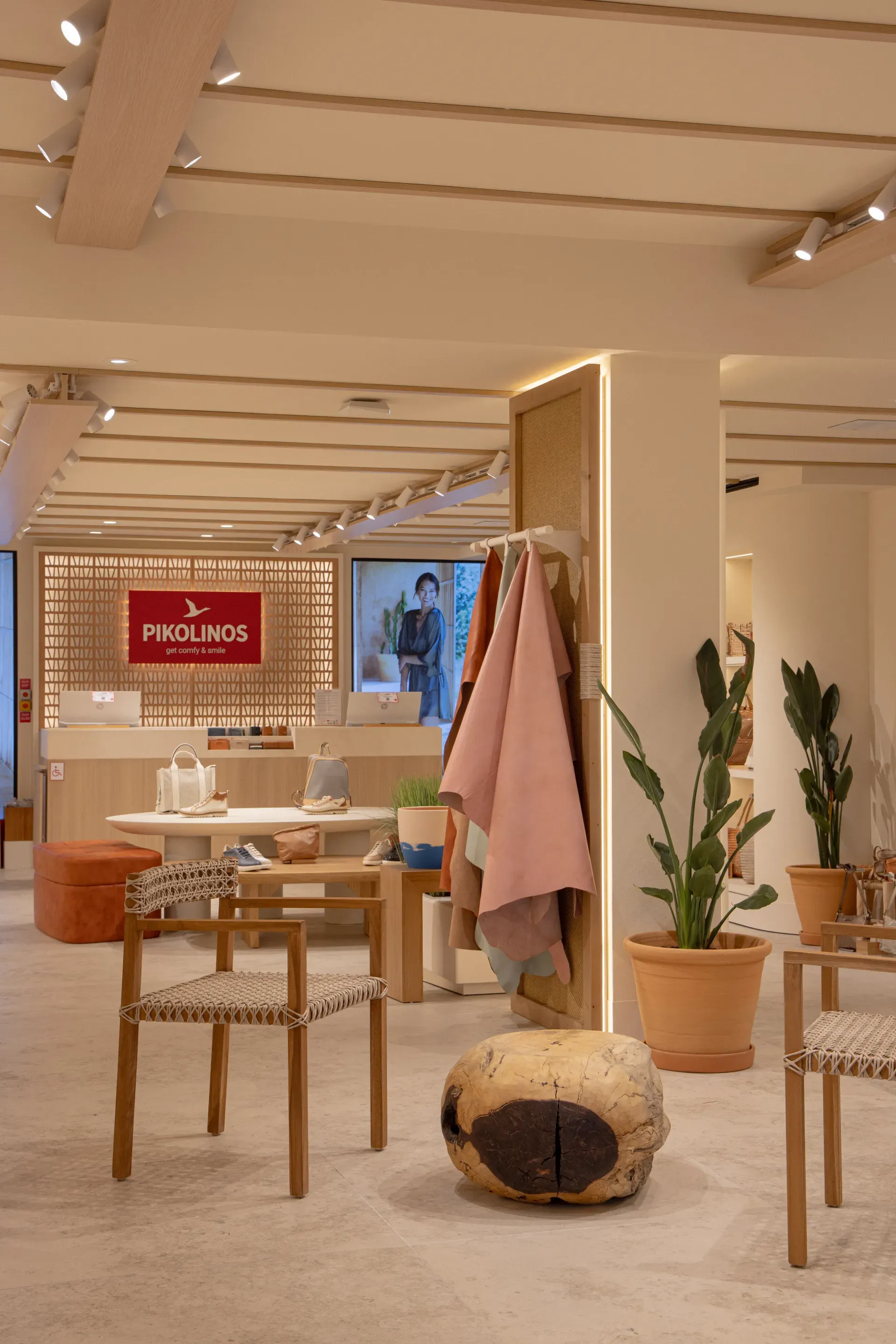
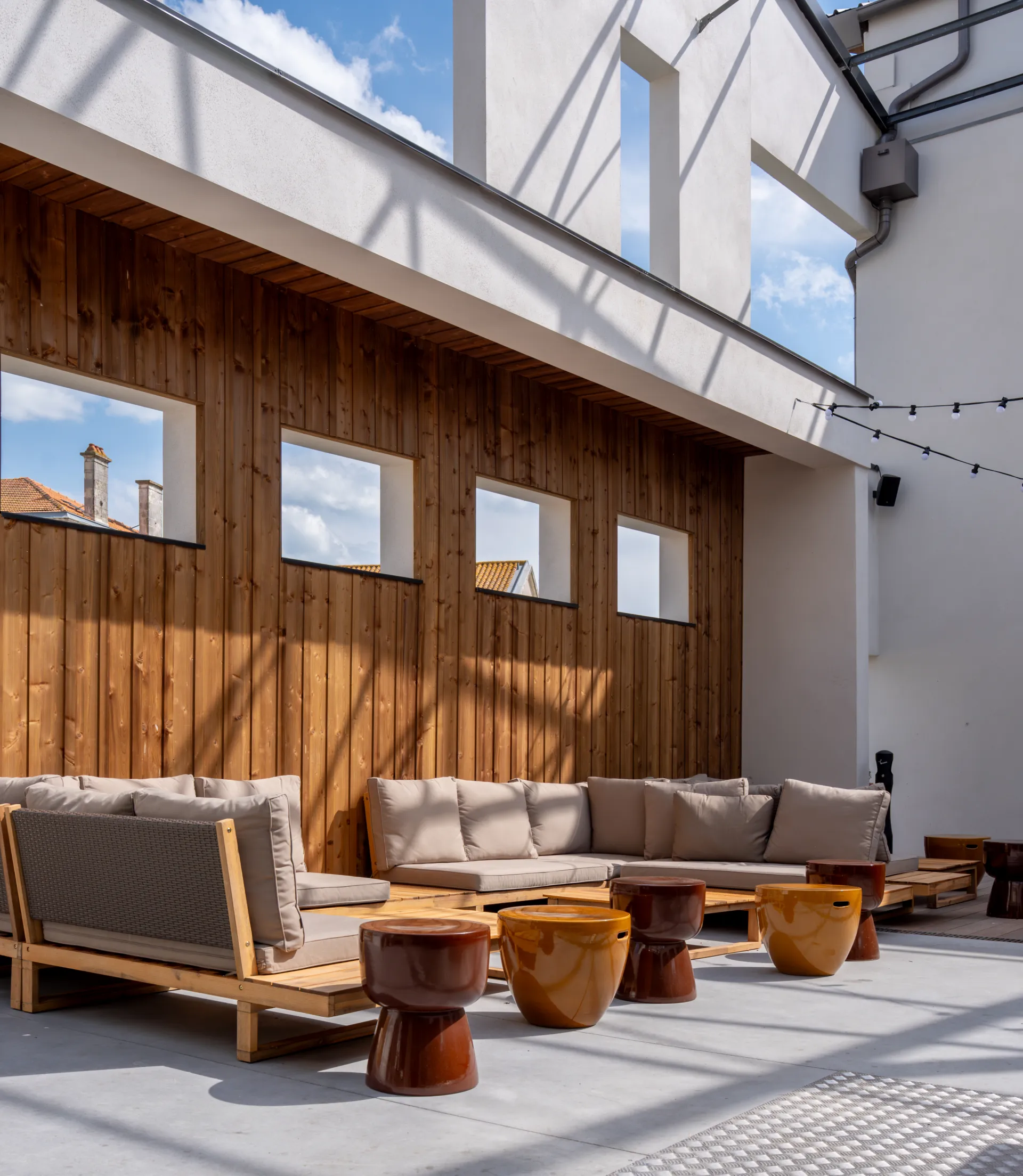
There is a fundamental difference between materials that deteriorate and those that develop a patina. A chipped laminate is damaged. A marked solid oak tabletop tells a story and can be sanded, re-oiled, and repaired. Solid wood, stone, brass, full-grain leather, lime plaster, and terrazzo belong to this second family: their wear is an aesthetic asset, and almost everything about them can be restored. This is one of the secrets of timeless interiors: they are made of materials that embrace the passing of time. Conversely, many synthetic materials mimicking these substances age poorly and cannot be repaired. They are replaced, meaning they are thrown away.
The origin: traceable supply chains
For wood, FSC and PEFC certifications attest to responsible forest management. Furthermore, favouring European species such as oak, ash, beech, or pine reduces transport and supports local supply chains. For textiles, wool, linen (of which France is one of the world's leading producers), and hemp offer robust alternatives to synthetics. As for flooring, genuine linoleum – made from linseed oil, wood flour, and jute – deserves to be distinguished from the vinyl flooring with which it is often confused: its composition is predominantly natural and its longevity is remarkable. Lastly, paints and varnishes with low VOC (volatile organic compound) emissions are no longer a luxury but a standard, crucial for indoor air quality. This is as much a health issue as a comfort one.
Re-use: the resource that is already there
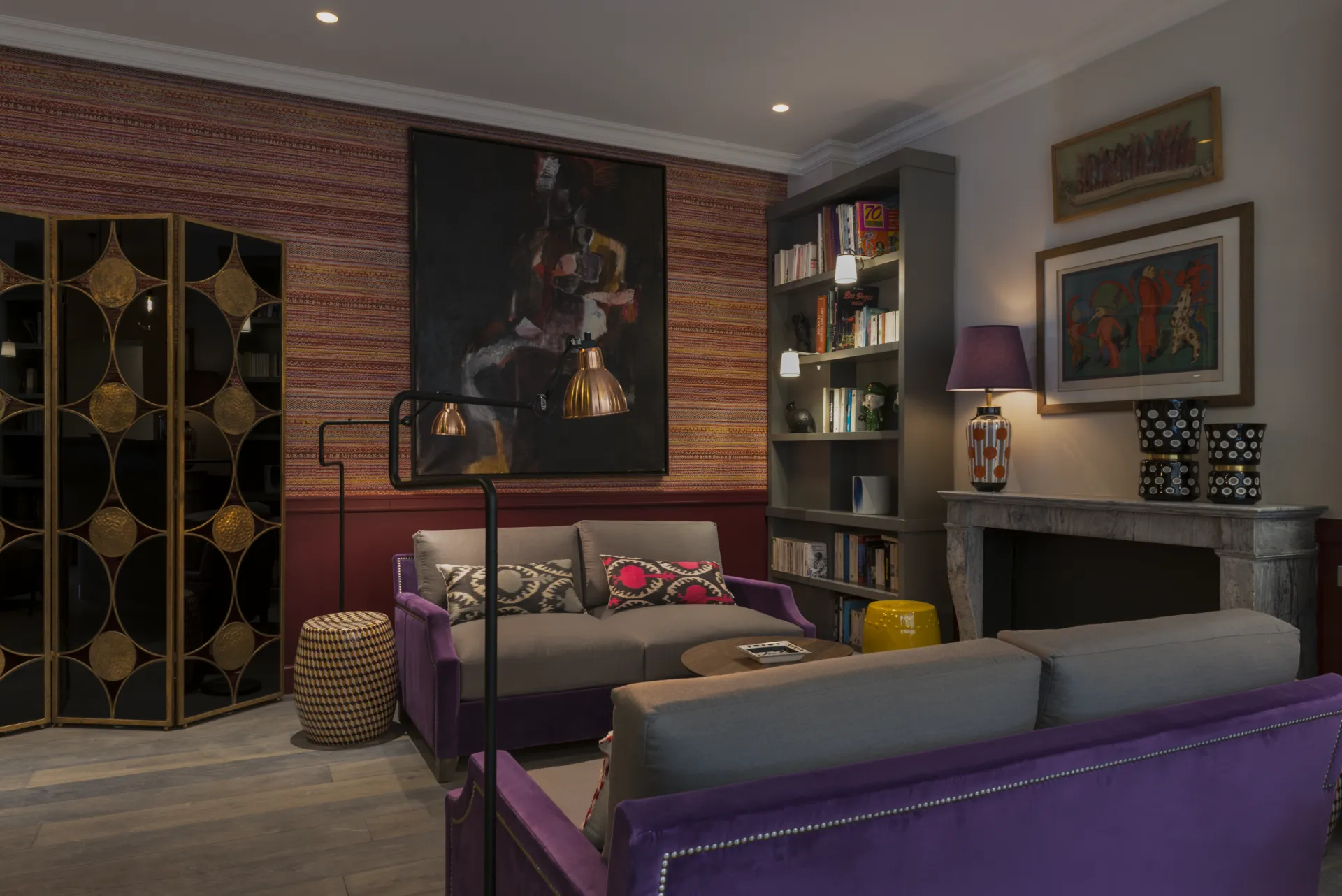
The most sustainable approach is to avoid producing what already exists. This starts with the building itself: preserving and restoring an old parquet floor, carefully salvaging doors, cast-iron radiators, or an old glass partition, rather than throwing everything into a skip. It continues with furniture: the vintage market and professional re-use platforms now offer high-quality pieces, often better constructed than their new equivalents, which bring a depth to a space that no catalogue can provide. In an eclectic project, mixing sourced vintage pieces, custom-designed furniture, and contemporary designs is not just an aesthetic signature; it is a saving on resources.
Sustainable, therefore demountable
A criterion that is still too rare in decision-making: the end of life. A screwed assembly can be taken apart and re-used. A glued assembly ends up as waste. Designing reversible layouts with modular fitted furniture, loose-laid rather than glued floor coverings where possible, and accessible technical installations means giving a space the capacity to evolve without destroying everything. For a restaurant or a shop, whose identity can change within a few years, this is also a direct financial benefit.
Our method: weighing options category by category
There is no perfect material, only the right choices for a given use, budget, and lifespan. Our role is to make these decisions clear. Where to invest in solid and bespoke elements: contact surfaces, the things hands touch. Where to accept simpler solutions: what only meets the eye. And how each option will perform in ten years. A sustainable interior is not a static interior: it is an interior designed to evolve with life.