•
Follow us /
We photograph the decor, we comment on the menu, but what often determines whether or not we return to a restaurant is something we cannot see: the sound. A dinner where you have to raise your voice to be heard is tiring, shortens the meal and spoils the memory of the place. Conversely, a dining room where conversation remains fluid even at peak times provides a comfort that we don't always know how to name. This comfort is designed, and it is designed early.
Why are so many restaurants noisy?
The culprit is well-known: reverberation. When sound bounces off hard surfaces like bare concrete, glass, tiling or exposed ceilings, it takes a long time to die down. Conversations then overlap with other conversations, and everyone speaks louder to be heard above the ambient noise, which increases the sound level even further. This is the cocktail party effect, a well-documented spiral. The irony is that this situation is often the by-product of an aesthetic: minimalist and mineral interiors, which are highly photogenic, are also the most reverberant. The designer's challenge is precisely to reconcile the two.
Absorbing without cluttering
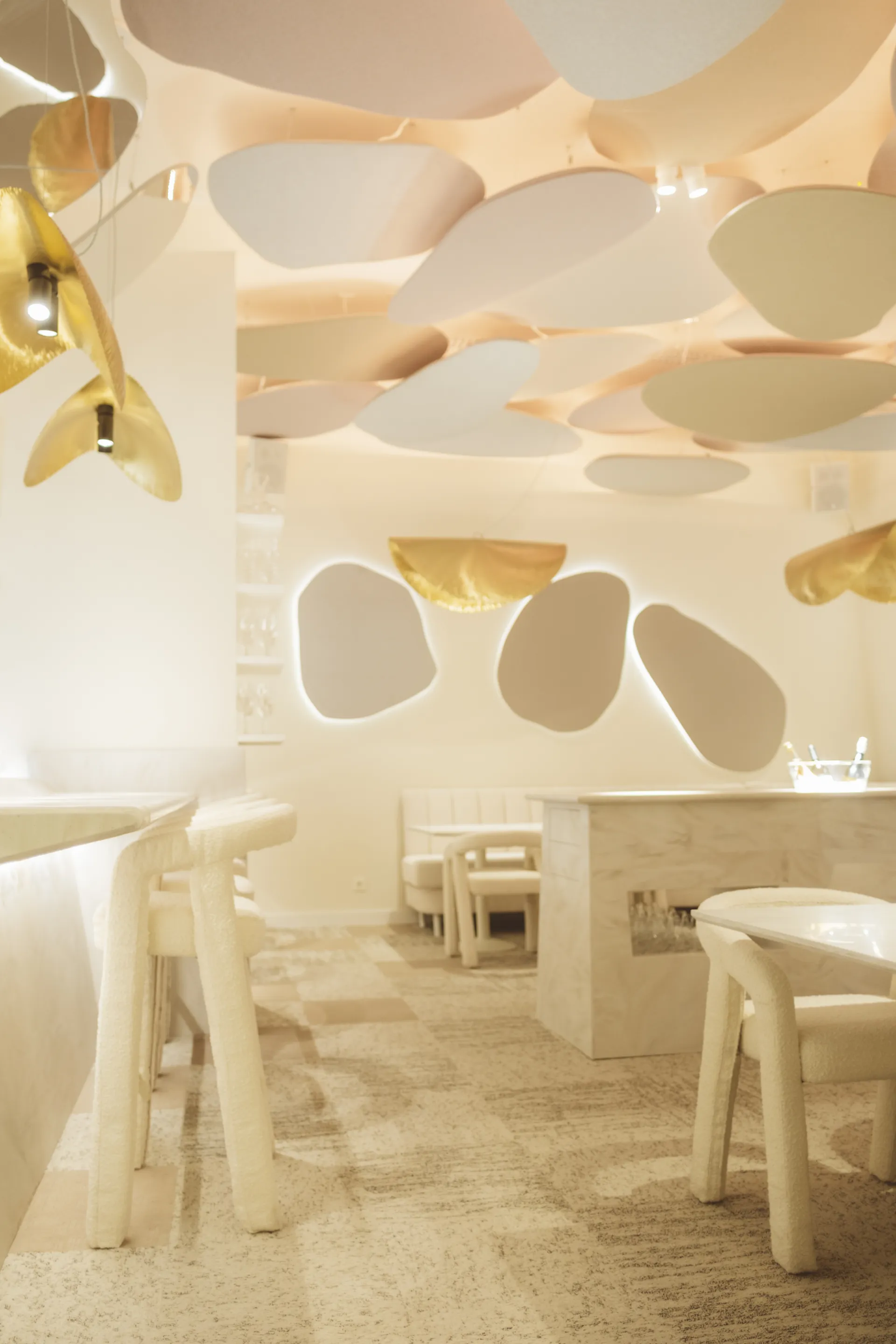
The classic response is to introduce absorbing surfaces, which trap sound energy instead of reflecting it. Today's palette is highly varied, and many solutions can remain invisible or become design statements in their own right: suspended ceilings and acoustic baffles, fabric-covered wall panels, heavy curtains, upholstered banquettes, rugs, fabric furniture, and even acoustic light fittings that combine lighting and absorption. The golden rule is to prioritise treating the ceiling and opposing walls, where sound bounces back and forth.
But acoustics is not just about adding foam. The layout itself is a tool. Breaking up a large room into smaller spaces, alternating ceiling heights, keeping tables away from noisy areas like the bar, the open kitchen or the coffee machine, and angling banquettes to create alcoves: these are all decisions made at the sketching stage, when they still cost nothing.
In hotels, silence is a promise
In the hotel industry, the challenge shifts. It is no longer just about conversational comfort, but isolation. Noise is one of the leading sources of dissatisfaction in guest reviews, and it hinges on technical details: soundproofing between adjoining rooms, the treatment of entrance doors (often the weakest link), decoupling plumbing systems, and the choice of flooring in corridors. In historic Parisian buildings, with their wooden floors and lightweight partitions, these points require an honest assessment during the feasibility phase, as correcting them after the fact is always more expensive.
Designing sound as we design light
Our approach is simple: the soundscape of a place is part of its identity, just like its lighting or materials. A cocktail bar can embrace a vibrant sound energy that contributes to the atmosphere. A fine dining restaurant aims for intimacy. A hotel lobby needs to absorb foot traffic without becoming so quiet that it feels intimidating. There is no single good acoustic, there is the right acoustic for each use. And this is decided with the client from the very first sketches, in collaboration with an acoustic consultant for complex projects if necessary.